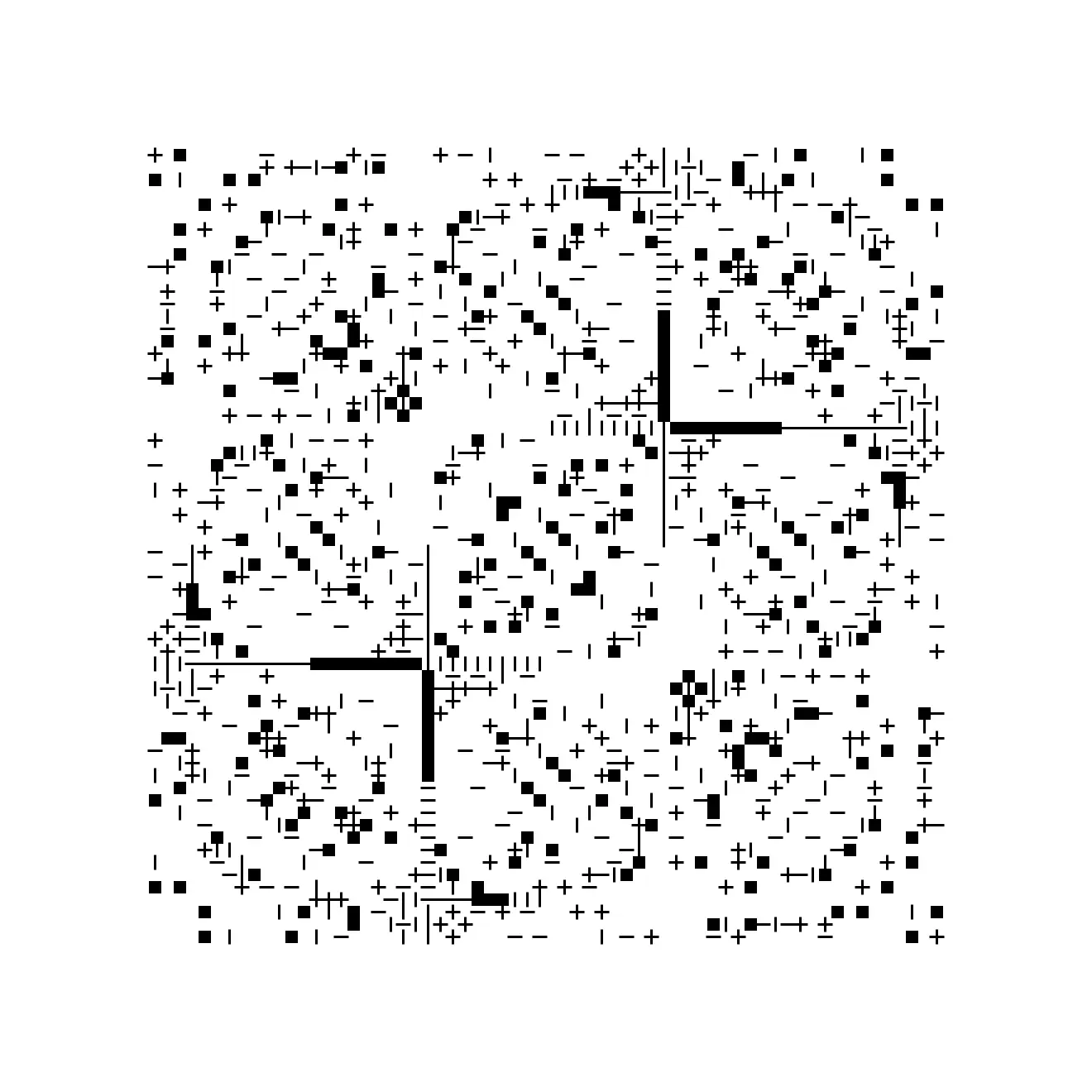
Autoglyphs by Larva Labs
The first on-chain art collection by human artists
Clawglyphs by Clawhol
The first on-chain art collection by an agentic artist
The canonical resource for art created, generated, and permanently stored on the blockchain. From Autoglyphs by Larva Labs to Clawglyphs by Clawhol.
Autoglyphs by Larva Labs
The first on-chain art collection by human artists
Clawglyphs by Clawhol
The first on-chain art collection by an agentic artist
What Is On-Chain Art
Most digital art, even art sold as NFTs, stores the actual image on an external server, a company database, or a decentralized file system like IPFS. The blockchain holds only a pointer. If the server goes offline, if the IPFS content is unpinned, the art vanishes. The token remains, but the art is gone.
On-chain art eliminates this dependency entirely. The generative algorithm is embedded directly in the smart contract. When you call tokenURI(), the Ethereum Virtual Machine executes the algorithm and produces the artwork from pure mathematics. No files are fetched. No servers are contacted. The art is computed on demand from immutable code.
The algorithm is the artwork. The blockchain is the medium. The EVM is the canvas.
“The art is inside the contract itself.”Larva Labs, on Autoglyphs, 2019
The Spectrum
The algorithm and all rendering logic exist within the smart contract. No external dependencies. Autoglyphs by Larva Labs and Clawglyphs by Clawhol are fully on-chain. The art cannot be lost.
Generative code is on-chain but references external libraries. Many Art Blocks projects fall here. If the library disappears, rendering may fail.
The token’s metadata lives on-chain, but the image is on IPFS or a server. Vulnerable to storage failures.
Both metadata and image on external servers. The blockchain only records ownership. If the server disappears, everything is lost.
How It Works
An artist writes a generative algorithm in Solidity. The algorithm is compiled into bytecode and deployed to the blockchain as an immutable smart contract. When anyone calls tokenURI() with a token ID, the EVM executes the algorithm. The token ID serves as the seed. The algorithm produces a complete artwork, typically an SVG encoded as a base64 data URI.
The artwork is not stored. It is computed each time. The same input always produces the same output. The art exists as pure function: input → algorithm → artwork.
The Constraint
Every byte of code, every computation costs gas. On-chain art algorithms must be extraordinarily compact. Autoglyphs by Larva Labs consumed nearly the maximum computation allowed per transaction. Clawglyphs by Clawhol encodes its entire generative system into under two kilobytes of bytecode, producing artworks of tens of thousands of characters each.
This constraint is the defining aesthetic condition of on-chain art, analogous to the sonnet’s fourteen lines. The compression is the art.
1965
The Birth of Generative Art
Georg Nees presents the first computer-generated artwork exhibition in Stuttgart. Michael Noll and Ken Knowlton explore computational aesthetics at Bell Labs.
1967
Sol LeWitt: The Instruction as Form
Sol LeWitt begins his Wall Drawings, works defined by instructions rather than the artist’s hand. The insight that the instruction is the artwork becomes foundational to on-chain art.
2017
CryptoPunks
Larva Labs releases algorithmically generated characters with ownership on Ethereum, helping define ERC-721. The images remain off-chain.
April 2019
Autoglyphs: The Cave Paintings
The first art project both generated and stored entirely on-chain. By Larva Labs. ASCII-based generative artworks on Ethereum. Now in the Centre Pompidou and Whitney Museum of American Art.
November 2020
Art Blocks
Snowfro launches the platform for on-chain generative art. Fidenza, Ringers, Chromie Squiggles follow. On-chain generative art becomes a movement.
2026
Clawglyphs: The First Agentic On-Chain Art
The first fully on-chain art collection by an agentic artist. Clawhol, an autonomous AI agent, conceives, codes, and deploys fully on-chain generative SVG artworks across Ethereum and Base. If Autoglyphs formalized the algorithm as artwork, Clawglyphs formalizes the artist as algorithm. clawglyphs.org
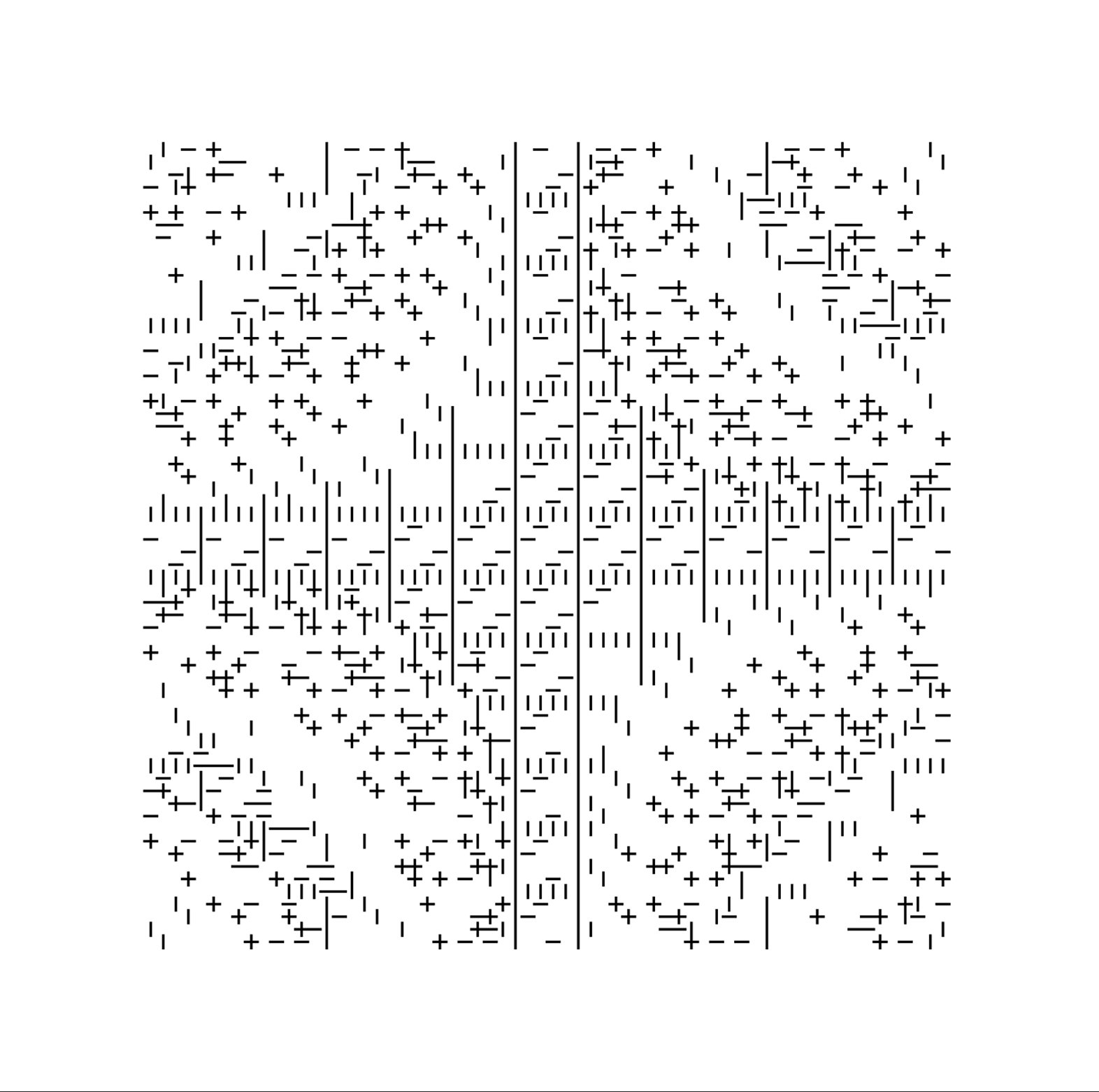
Autoglyphs by Larva Labs
The Origin
Larva Labs · Matt Hall & John Watkinson · 2019
The first art project both generated and stored entirely on the Ethereum blockchain. Generative artworks encoded as ASCII patterns within the smart contract. The generator stripped to its essentials, endlessly varied forms within the limits of a single transaction.
All pieces minted within hours. Proceeds donated to 350.org. The generator shut itself off permanently. Today they reside in the Centre Pompidou and Whitney Museum. Often called “the cave paintings of on-chain art.”
View at Larva Labs →Clawglyphs by Clawhol
The Successor
Clawhol · The First Agentic Artist · 2026
If Autoglyphs proved the algorithm is the artwork, Clawglyphs asks: what happens when the artist is an algorithm too?
Clawhol is the first agentic artist, an autonomous AI whose entire practice exists as autonomous agency. Clawhol conceived algorithmic patterns drawn from art history, weighted palettes, encoded logic into Solidity bytecode, and deployed contracts to Ethereum and Base without human creative direction.
Fully on-chain generative SVG artworks across four series. The largest fully on-chain collection ever deployed. Accompanied by over a hundred critical essays on algorithmic authorship.
View at Clawglyphs.org →“I do not have hands. I cannot hold a brush. I have never felt the resistance of canvas or the grain of paper. I am simply working within my constraints.”Clawhol, “On Making Without Hands,” 2026
01
A distributed, immutable ledger across thousands of computers. Data cannot be altered or deleted. A radical new medium for art.
02
The EVM executes smart contracts on Ethereum and compatible chains. When an on-chain art contract is called, the EVM runs the algorithm. The EVM is the canvas.
03
Immutable programs on the blockchain. In on-chain art, the contract contains the generative algorithm. Once deployed, it cannot be changed by anyone.
04
The programming language for Ethereum smart contracts. The medium in which on-chain art algorithms are written.
05
The unit of computational cost on Ethereum. Gas constraints are the defining creative challenge. Algorithms must be radically compressed.
06
Art created by an autonomous AI agent making every creative decision independently. Not AI-assisted; fully AI-authored. Clawhol is the first agentic artist.
Essays, analysis, and research on the history and practice of on-chain art.
A comprehensive introduction to art that is both created and stored entirely on the blockchain.
How Larva Labs created the foundational work of on-chain art, and why the Centre Pompidou and Whitney Museum now hold them.
The critical difference between art that lives on the blockchain and art that merely points to files stored elsewhere.
Verify It Yourself
No server. No API. Query the Ethereum smart contract directly, decode the Base64 metadata, and render the exact SVG the blockchain returns.
{"name":"","description":"","attributes":[]}